The Stadium of Validation
The Stadium of Validation© (Spanish: Estadio de la Validación) is a consumer behavior analysis framework developed by Marc Perelló-Sobrepere in his book, "¿Me lo compro?" (Libros de Cabecera, 2026). The model uses the metaphor of a sports stadium to represent three rings that categorize the people in the consumer's environment —the inner ring, the peerring, and the extended ring— and thus observe the different degrees of influence these people have on the consumer's purchase decision-making process.


The central premise of the Stadium of Validation© is that the people in the consumer's environment, even though not purchasers of the brand themselves, are decisive in shaping the consumer's purchase decision—whether it influences before, during, or after that purchase. The environment validates the consumer or holds them back, and this is not intuition but a fact backed by data.
According to Nielsen, 88% of consumers trust recommendations from people they know more than any other advertising message. McKinsey identifies word of mouth as the primary factor behind between 20% and 50% of all purchase decisions, with greater weight as the product category becomes more expensive or unfamiliar. And according to the Edelman Trust Barometer, 8 out of 10 consumers say that trusting a brand to do the right thing is a decisive factor in their purchase decision.
The message is the same in all three cases: brands do not persuade on their own. They do so through the environment surrounding the person who decides.
For brands and companies
The Stadium of Validation© makes it possible to analyse the end consumer's environment, in order to understand who makes up that environment and how it influences the purchase decision of the consumer or buyer persona. This analysis makes it easier to create campaigns and adapt messages so that they resonate within that environment.
Given that 8 out of 10 consumers trust a direct recommendation more than a paid advertising action, brands need to reach the environment, get it to know them and retain their message, and in doing so enable the environment itself to validate the purchase to the consumer.
Due to its visual and applied nature, the model lends itself both to internal presentations for in-house marketing departments and to agency presentations to clients.
For teachers and students
The Stadium of Validation© is also a teaching tool designed for the classroom. Its visual structure makes it possible to design class activities, whether individual or group-based, in which students work through each of the rings and analyse how they fit within brand communication.
The model lends itself both to more creative exercises—such as storytelling or brand narrative—and to more strategic approaches linked to branding and institutional communication, thereby offering a 360º view of brand communication and marketing.
Thanks to its straightforward graphic representation as concentric circles, it is useful both for teachers looking to structure practical sessions and for students who need a clear framework with which to analyse real-world cases.


Book: ¿Me lo compro?
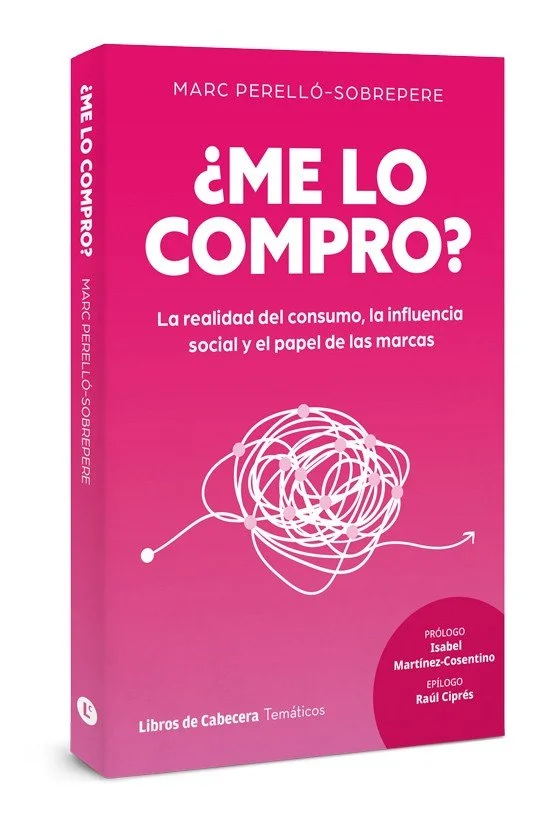
The full thesis behind the Stadium of Validation© model is developed in the book ¿Me lo compro?, published in 2026 by Libros de Cabecera.
How to work around each ring
Inner ring. In the inner ring we place the people with the closest emotional bond to the consumer: family, partner, children, and closest friends. Their influence is the quietest but also the most decisive, acting as a final trust filter before a decision is made. They don't need to understand the product or service in question: their opinion carries weight because of the relationship, not technical knowledge. A casual comment from this circle can stop or push through a purchase that already seemed decided.
Peer ring. In the peer ring we place acquaintances, colleagues, communities and tribes with whom the consumer shares codes and references, without reaching the intimate bond of the first ring. Their influence works like a social mirror: they don't determine whether something is good or bad, but whether it fits the identity the consumer wants to project. The question here is no longer "does it work?" but "does it say what I want it to say about me?".
Extended ring. In the extended ring we place opinion leaders, celebrities and content creators the consumer doesn't know personally, but whose constant presence builds the cultural backdrop against which their decisions take place. They don't dictate a specific purchase, but they legitimise certain behaviours, styles or brands as desirable or accepted. Their influence is the broadest and the hardest to control, because it operates through reputation and public visibility rather than direct relationship.
¿Me lo compro? can be bought online: